- Email: rkrahi2007@gmail.com
- Call: +91 95608 72718

Total & Partial Knee Replacement
in Faridabad, Delhi NCR
Total & Partial Knee Replacement in Faridabad, Delhi NCR
Knee replacement is a well-established surgical option for people with severe knee arthritis or joint damage that causes persistent pain, stiffness, and loss of mobility. The procedure replaces worn joint surfaces with specially designed metal and durable plastic components to help reduce pain and improve everyday function.
Depending on where arthritis is located and the condition of the rest of the knee, your orthopedic surgeon may recommend a total knee replacement or a partial knee replacement. The right choice is individual: it depends on your symptoms, examination, X-rays or other imaging, knee stability, overall health, and personal goals.
At Dr. Rakesh Kumar Orthopedic Clinic, the focus is on a clear diagnosis, realistic expectations, and a personalised treatment plan. Knee replacement is usually considered only after appropriate non-surgical measures no longer provide adequate relief.
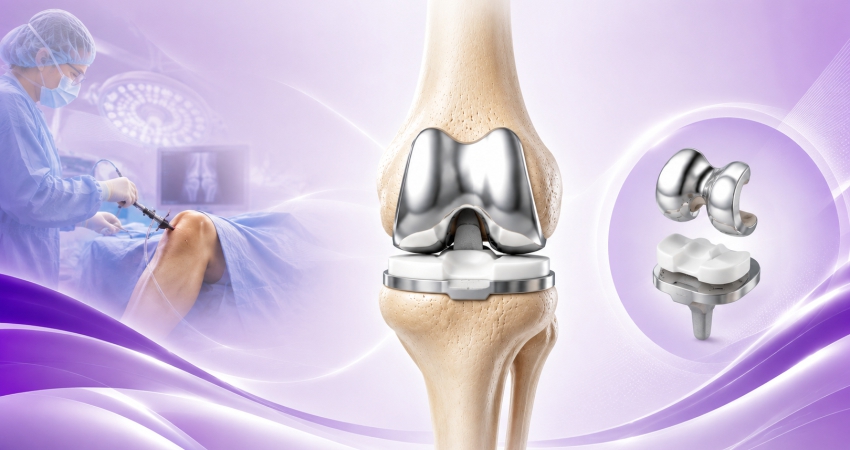
What Is Total Knee Replacement?
Total knee replacement, also called total knee arthroplasty, treats arthritis or damage affecting more than one part of the knee. During surgery, the damaged surfaces of the thighbone and shinbone are carefully resurfaced with metal components, with a smooth plastic bearing placed between them. The kneecap may also be resurfaced when clinically appropriate.
The aim is to relieve arthritis-related pain and support activities such as walking, climbing stairs, getting in and out of a chair, and other daily tasks. A total knee replacement does not create a natural knee or guarantee full range of motion, so realistic goals and rehabilitation are essential.
What Is Partial Knee Replacement?
Partial knee replacement, also called unicompartmental knee replacement, treats only the part of the knee affected by arthritis. It may be considered when disease is limited to one compartment and the remaining cartilage, ligaments, and knee alignment are suitable.
Because only the damaged part of the joint is resurfaced, more of the natural knee structures are retained. It is not suitable for every person with arthritis. If arthritis affects multiple compartments or the knee is unstable, total knee replacement may be the safer and more effective option.
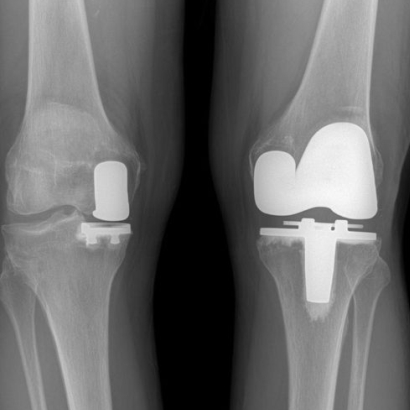
When Is Knee Replacement Considered?
Your orthopedic surgeon may discuss knee replacement when arthritis symptoms have a significant effect on your quality of life and appropriate non-surgical treatment has not provided sufficient relief. The decision is based on pain and function, not age alone.
- Severe knee pain during walking or stair climbing
- Pain at rest or pain that affects sleep
- Stiffness and reduced knee movement
- Knee deformity, instability, or worsening function
- X-ray evidence of advanced joint damage
- Limited benefit from medication, physiotherapy, or injections
Total vs. Partial Knee Replacement: How the Choice Is Made
Both procedures are designed to treat arthritis-related pain, but they are used in different situations. Total knee replacement is generally used when arthritis is more widespread in the joint. Partial knee replacement may be an option when disease is confined to one area of the knee and key ligaments and other compartments remain healthy.
- Total: treats more widespread knee arthritis
- Partial: treats arthritis limited to one compartment
- Total: resurfaces the damaged joint surfaces across the knee
- Partial: retains more unaffected bone and joint structures
- Total: may be appropriate for more complex joint damage
- Partial: requires careful patient selection
Only a thorough orthopedic assessment can determine which option, if any, is appropriate. Your surgeon will discuss potential benefits, limitations, alternatives, and the possibility that the surgical plan may need to be adjusted based on findings at the time of surgery.
Recovery After Knee Replacement Surgery
Early movement and a structured physiotherapy programme are important after total or partial knee replacement. When medically appropriate, patients are encouraged to begin standing and walking with support soon after surgery. Rehabilitation focuses on managing pain and swelling, restoring knee movement, building strength, and progressing safely with daily activities.
Recovery is personal. The time needed to return to walking comfortably, driving, work, or recreational activities depends on your operation, health, type of work, and rehabilitation progress. Your surgeon and physiotherapist will provide specific guidance rather than a one-size-fits-all timeline.
Benefits, Risks, and Expectations
Many people experience substantial pain relief and improved ability to carry out daily activities after knee replacement. However, all surgery has risks, and an artificial joint has limitations. High-impact activities are usually discouraged after knee replacement to help protect the implant over time.
- Potential for reduced arthritis-related pain
- Improved ability to perform daily activities
- Physiotherapy is essential to recovery
- Risk of infection or blood clots
- Possible stiffness or ongoing pain
- Implants can wear or loosen over time
Contact your care team urgently for fever, wound drainage, increasing redness or swelling, calf pain, sudden chest pain, or shortness of breath. These can be warning signs of complications that need prompt medical attention.
Book Your Knee Replacement Consultation in Faridabad, Delhi NCR
If knee pain is limiting your mobility, work, sleep, or independence, consult Dr. Rakesh Kumar for an orthopedic assessment. You can discuss whether non-surgical treatment, partial knee replacement, or total knee replacement is the most appropriate next step for you.
- Phone: +91 - 956 087 2718
- Email: rkrahi2007@gmail.com
- Website: www.drrakeshortho.com
Frequently Asked Questions
-
What is the difference between total and partial knee replacement?
Total knee replacement resurfaces the damaged joint surfaces across the knee. Partial knee replacement treats only the affected compartment when arthritis is limited to one part of the knee and other structures are suitable.
-
Who may need knee replacement surgery?
Knee replacement may be considered for severe arthritis-related pain, stiffness, deformity, or loss of function that continues despite appropriate non-surgical care. The choice is made after an orthopedic assessment.
-
Can I choose partial knee replacement instead of total knee replacement?
Partial replacement is suitable only when arthritis is limited to a specific area of the knee and the rest of the joint, including key ligaments, is appropriate. Your surgeon will recommend the option that best fits your knee condition.
-
Is knee replacement surgery painful?
You will receive anaesthesia for the procedure. Discomfort after surgery is expected, but a pain-management plan, early movement, and physiotherapy are used to support recovery. Tell your care team if pain is not well controlled.
-
How long is recovery after knee replacement?
Recovery is individual. Early mobilisation and physiotherapy are important, but restoring strength, knee motion, and confidence takes time. Your surgeon will advise you on activity, driving, work, and follow-up based on your progress.
-
Will I need physiotherapy after surgery?
Yes. A regular physiotherapy and exercise programme is a key part of recovery. It helps restore knee movement, strengthen the leg, improve balance, and support a safe return to daily activities.
-
What activities can I do after knee replacement?
Low-impact activities such as walking, swimming, cycling, and golf are often encouraged once your surgeon approves them. High-impact activities such as running, jumping, and contact sports are generally discouraged to reduce stress on the implant.
-
What are the risks of knee replacement?
Potential risks include infection, blood clots, bleeding, stiffness, persistent pain, implant wear or loosening, nerve or blood-vessel injury, and the possibility of further surgery. Individual risks depend on health and the procedure.
-
When should I seek urgent advice after knee replacement?
Seek prompt medical advice for fever, wound drainage, increasing redness or swelling, calf pain, sudden chest pain, or shortness of breath. Your surgeon will also provide specific post-operative warning signs before you go home.