- Email: rkrahi2007@gmail.com
- Call: +91 95608 72718

Total Hip Replacement (THR)
in Faridabad
Total Hip Replacement (THR) in Faridabad
Total Hip Replacement (THR), also known as total hip arthroplasty, is a surgical procedure used to replace damaged parts of the hip joint with artificial components. It may be considered for patients experiencing significant hip pain, stiffness and difficulty with walking or daily activities because of advanced joint damage.
The hip is a ball-and-socket joint that allows the leg to move in multiple directions. When the cartilage and other structures of the joint become severely damaged, movement can become painful and limited. Hip osteoarthritis is one of the common conditions for which hip replacement may be considered.
At Dr. Rakesh Kumar Orthopedic Clinic, patients with persistent hip pain are evaluated through a detailed clinical examination and appropriate imaging. Depending on the diagnosis, severity of joint damage, symptoms, general health and functional requirements, treatment may include conservative management or total hip replacement surgery.
What Is Total Hip Replacement?
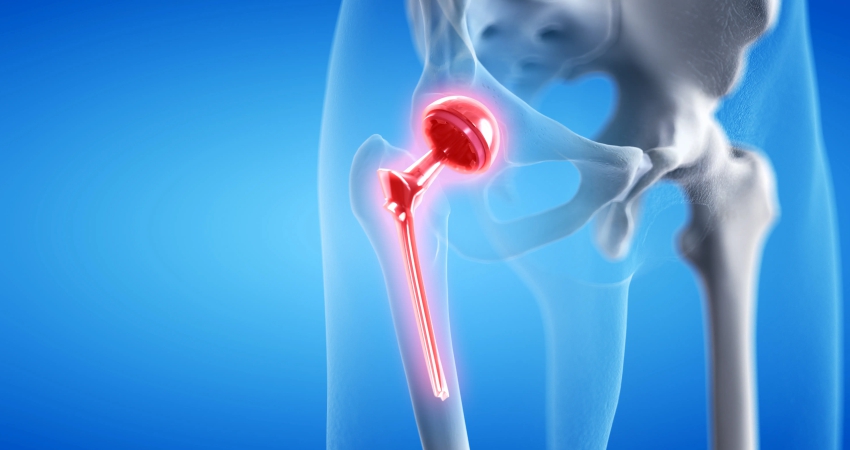
Total hip replacement is a surgical procedure in which both major damaged surfaces of the hip joint are replaced with artificial components. The hip consists of a rounded femoral head, or ball, that fits into the acetabulum, or socket, of the pelvis.
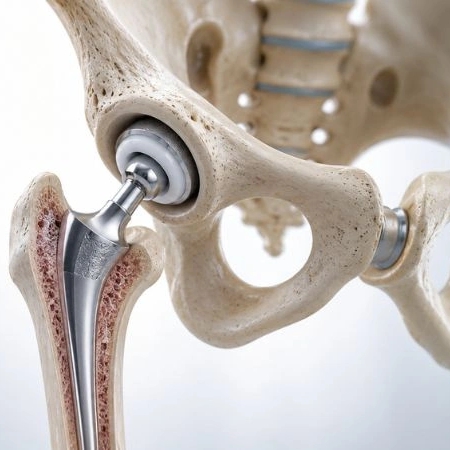
During total hip replacement, the damaged femoral head is removed and replaced with an artificial ball attached to a stem. The damaged socket is also prepared and fitted with an artificial socket component. The implant materials may include combinations of metal, ceramic and polyethylene depending on the implant system and the patient's individual requirements.
The goal of surgery is to reduce pain and improve hip function and mobility when the damaged joint is significantly affecting the patient's quality of life.
Conditions That May Require Hip Replacement
Total hip replacement may be considered when the hip joint has significant damage and symptoms are affecting everyday life. Conditions may include:
- Advanced hip osteoarthritis
- Severe and persistent hip pain
- Significant loss of hip movement
- Hip joint damage affecting daily activities
- Certain hip fractures or fracture-related damage
- Selected other conditions causing severe hip joint damage
Symptoms of Severe Hip Joint Damage
Hip problems can affect mobility and everyday activities in different ways. Persistent or progressive symptoms should be evaluated by an orthopedic specialist to identify the underlying cause.
- Persistent hip pain
- Pain while walking or standing
- Hip stiffness
- Reduced range of hip movement
- Difficulty climbing stairs
- Difficulty performing daily activities
- Pain affecting sleep
- Reduced walking distance or mobility
Diagnosis Before Total Hip Replacement
Diagnosis begins with a detailed medical history and physical examination. The orthopedic assessment may include evaluation of hip movement, walking pattern, pain level, muscle strength and the effect of symptoms on everyday activities.
X-rays are commonly used to evaluate the hip joint and assess changes such as narrowing of the joint space, bone changes or other structural abnormalities. Additional imaging may be advised when required based on the suspected condition.
A complete medical assessment is also important before surgery. Factors such as general health, existing medical conditions, medications and previous treatments may be considered when planning the procedure.
Non-Surgical Treatment Before Hip Replacement
Total hip replacement is not automatically required for every patient with hip pain. Depending on the cause and severity of symptoms, non-surgical treatment may be considered first.
Treatment can include activity modification, appropriate medication, weight management where appropriate, strengthening exercises, physiotherapy and other measures recommended by the treating orthopedic specialist.
Hip replacement may be considered when pain and functional limitation remain significant despite appropriate conservative treatment and the hip joint has substantial structural damage.
When Is Total Hip Replacement Recommended?
Total hip replacement may be considered when hip pain and stiffness significantly interfere with walking, sleep, work or everyday activities and other appropriate treatments are no longer providing adequate relief.
The decision for surgery is based on the overall clinical picture, including symptoms, examination findings, imaging results, functional limitations and the patient's general health.
A detailed consultation helps determine whether hip replacement is appropriate or whether another treatment option may be more suitable for the individual patient.
How Is Total Hip Replacement Surgery Performed?
During total hip replacement, the surgeon accesses the hip joint and removes the damaged femoral head. A new artificial femoral component is then placed into the thigh bone.
The damaged surface of the acetabulum, or hip socket, is prepared and an artificial socket component is positioned. The new components are then assembled to form an artificial hip joint.
The exact surgical approach, implant design and fixation method depend on factors such as the patient's anatomy, bone quality, diagnosis, overall health and the surgeon's assessment.
Hip Replacement Implants
Hip replacement implants are designed to recreate the function of the natural hip joint. Different combinations of materials and implant designs may be available.
Depending on the individual case, implant components may use materials such as metal, ceramic and polyethylene. The selection of an implant is based on several factors, including bone quality, age, activity level, anatomy and the surgeon's clinical assessment.
Patients should discuss the available implant options, expected longevity and suitability of different designs with their orthopedic surgeon before surgery.
Potential Benefits of Total Hip Replacement
For appropriately selected patients, total hip replacement can help relieve pain and improve mobility and hip function. Results vary between individuals and depend on the underlying condition, rehabilitation and other patient-specific factors.
- Reduction in hip pain
- Improved walking ability
- Improved hip movement
- Better ability to perform daily activities
- Improvement in mobility and function
- Potential improvement in quality of life
Hip replacement does not guarantee complete elimination of all symptoms or restoration to the exact function of a natural hip. Outcomes vary according to individual health, joint condition, implant factors and rehabilitation.
Preparing for Total Hip Replacement Surgery
Preparing for hip replacement may involve a medical evaluation, investigations and discussion of existing medicines or health conditions. The surgical team may also provide advice regarding exercises, nutrition, smoking and weight management where relevant.
Patients may be advised to strengthen the muscles around the hip before surgery where appropriate. Planning for the recovery period at home can also make the early stages of rehabilitation easier.
Your orthopedic and medical team will provide individual instructions based on your health and the planned procedure.
Recovery After Total Hip Replacement
Recovery after total hip replacement varies from person to person. Walking and movement are generally started early after surgery under the guidance of the healthcare team. A walking frame, crutches or another walking aid may be required initially.
Physiotherapy and prescribed exercises help gradually improve hip movement, muscle strength, balance and walking ability. The rehabilitation programme is progressed according to healing and individual recovery.
Many patients experience substantial improvement before complete recovery. However, recovery can continue for several months and patients should follow their surgeon's instructions regarding activities, driving, work, exercise and follow-up appointments.
Physiotherapy After Hip Replacement
Physiotherapy is commonly an important part of recovery after total hip replacement. Early rehabilitation focuses on safe movement, walking and basic functional activities.
As healing progresses, exercises may focus on strengthening the muscles around the hip and improving balance, mobility and overall function.
Patients should perform only the exercises recommended by their healthcare team and should gradually increase activity according to their recovery.
Risks and Complications of Total Hip Replacement
Total hip replacement is a commonly performed procedure, but like any major surgery it has potential risks and complications. These risks vary depending on the patient's health, the type of procedure and other individual factors.
Potential complications may include infection, blood clots such as deep vein thrombosis, bleeding, hip dislocation, differences in leg length, fracture, nerve or blood-vessel injury and anaesthesia-related complications.
Over time, an artificial hip can also experience wear or loosening, and some patients may eventually require further surgery such as revision hip replacement. Your orthopedic surgeon will discuss procedure-specific risks and expected benefits before surgery.
How Long Does a Hip Replacement Last?
Modern hip replacement implants are designed to provide long-term function. However, the lifespan of an artificial hip varies between patients and depends on factors such as implant design, activity level, body weight, age, bone quality and individual circumstances.
Implant components can wear or loosen over time. If an artificial hip becomes painful, unstable or significantly worn, further evaluation may be required and revision surgery may sometimes be considered.
When Should You See an Orthopedic Surgeon for Hip Pain?
Persistent hip pain should not always be considered a normal part of ageing. An orthopedic evaluation may be appropriate when pain, stiffness or reduced mobility continues to interfere with walking, climbing stairs, sleeping, working or other daily activities.
Early assessment can help identify the underlying cause of hip pain and determine whether conservative treatment, further investigation or joint replacement may be appropriate.
Book a Consultation for Total Hip Replacement in Faridabad
If you are experiencing persistent hip pain, stiffness, difficulty walking or reduced mobility because of a damaged hip joint, an orthopedic evaluation can help identify the cause and available treatment options.
Consult Dr. Rakesh Kumar for an assessment of your hip condition and to understand whether physiotherapy, conservative treatment or total hip replacement surgery may be appropriate for you.
- Phone: +91 - 956 087 2718
- Email: rkrahi2007@gmail.com
- Website: www.drrakeshortho.com
Frequently Asked Questions About Total Hip Replacement
-
What is total hip replacement?
Total hip replacement, also called total hip arthroplasty, is a surgical procedure in which the damaged ball and socket of the hip joint are replaced with artificial components.
-
When is total hip replacement recommended?
Total hip replacement may be considered when severe hip pain, stiffness and loss of function significantly affect daily activities and appropriate non-surgical treatments no longer provide adequate relief.
-
What conditions can require total hip replacement?
Total hip replacement may be considered for advanced hip osteoarthritis and other conditions that cause significant joint damage, pain and loss of function. The appropriate treatment depends on the individual patient's diagnosis and overall health.
-
What happens during total hip replacement surgery?
During total hip replacement, the damaged femoral head is removed and replaced with an artificial ball attached to a stem, while the damaged socket is replaced with an artificial socket component.
-
How long does recovery take after total hip replacement?
Recovery varies between patients and depends on overall health, the surgical approach, rehabilitation and other individual factors. Walking and rehabilitation generally begin soon after surgery, while full recovery may take several months.
-
Will physiotherapy be required after hip replacement?
Physiotherapy and prescribed exercises are commonly an important part of recovery after total hip replacement. They help improve movement, strength, walking ability and function.
-
How long does a hip replacement last?
Modern hip replacement implants can provide long-term function, but their lifespan varies according to factors such as implant type, activity level, body weight, age and individual circumstances.
-
What are the risks of total hip replacement surgery?
Potential complications include infection, blood clots, bleeding, hip dislocation, leg-length difference, fracture, nerve or blood-vessel injury, implant wear or loosening and anaesthesia-related or other medical complications.
-
Can I walk after total hip replacement?
Walking is generally started early after hip replacement under the guidance of the healthcare team. A walking aid may be required initially, and activity is gradually increased according to recovery and medical advice.
-
When should I see an orthopedic surgeon for hip pain?
An orthopedic assessment may be appropriate when hip pain, stiffness, reduced walking ability or difficulty performing daily activities persists or progressively worsens despite appropriate conservative measures.